Background: Amt Bückeburg Decree and Execution Order (10/13 July 1841)
Overview and Summary
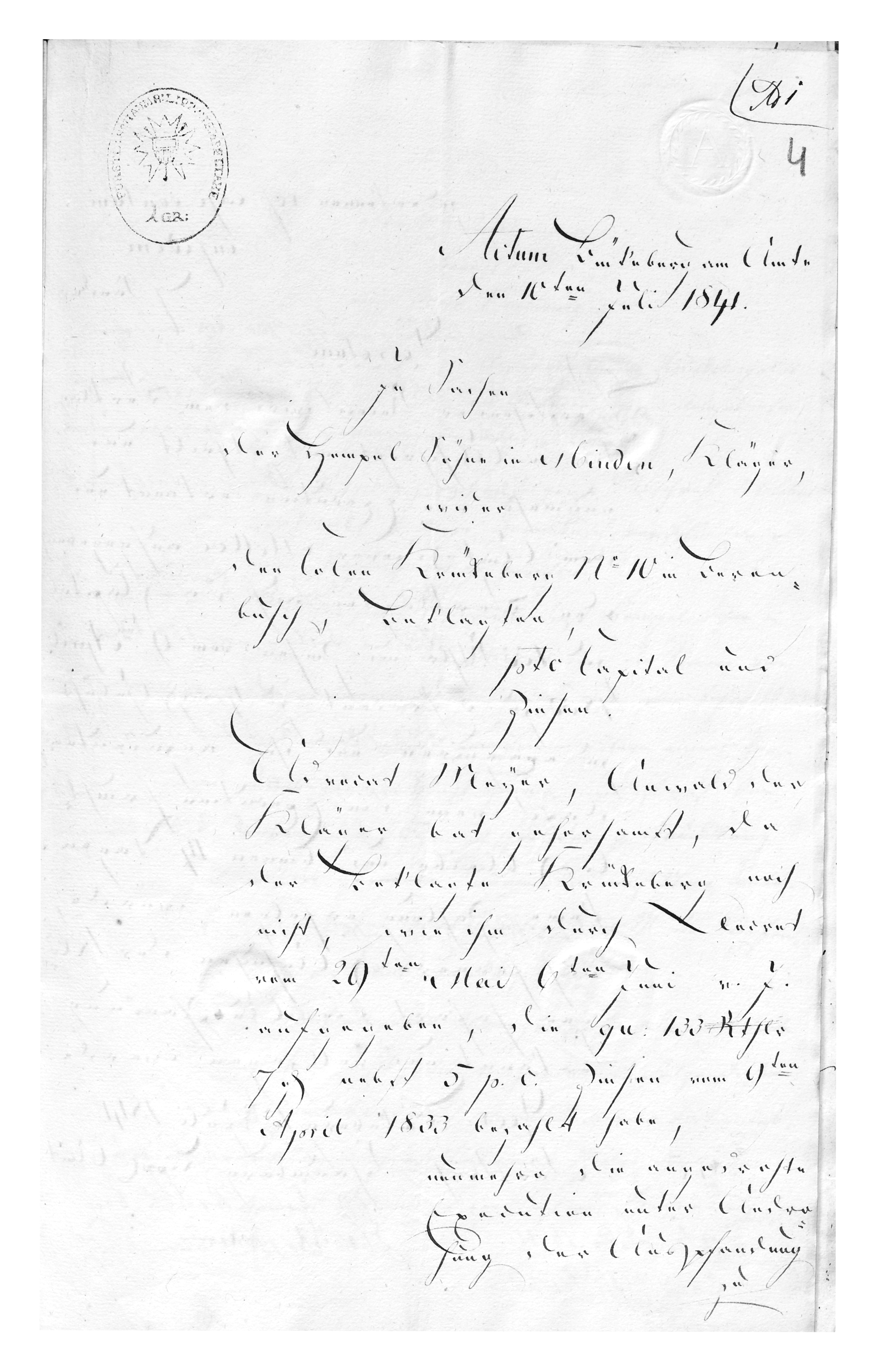
On 10 July 1841 at the Amt Bückeburg, the creditor Hempel & Söhne of Minden pressed their case against Johann Heinrich Krückeberg (Colon No. 10, Berenbusch). Their attorney, Advokat Meyer, told the Amt that Krückeberg still had not paid as he’d been ordered to do by decrees of 29 May and 6 June (of the previous year), and he asked that the threatened “execution” be put into effect—meaning formal enforcement of the judgment, up to and including distraint (seizure).
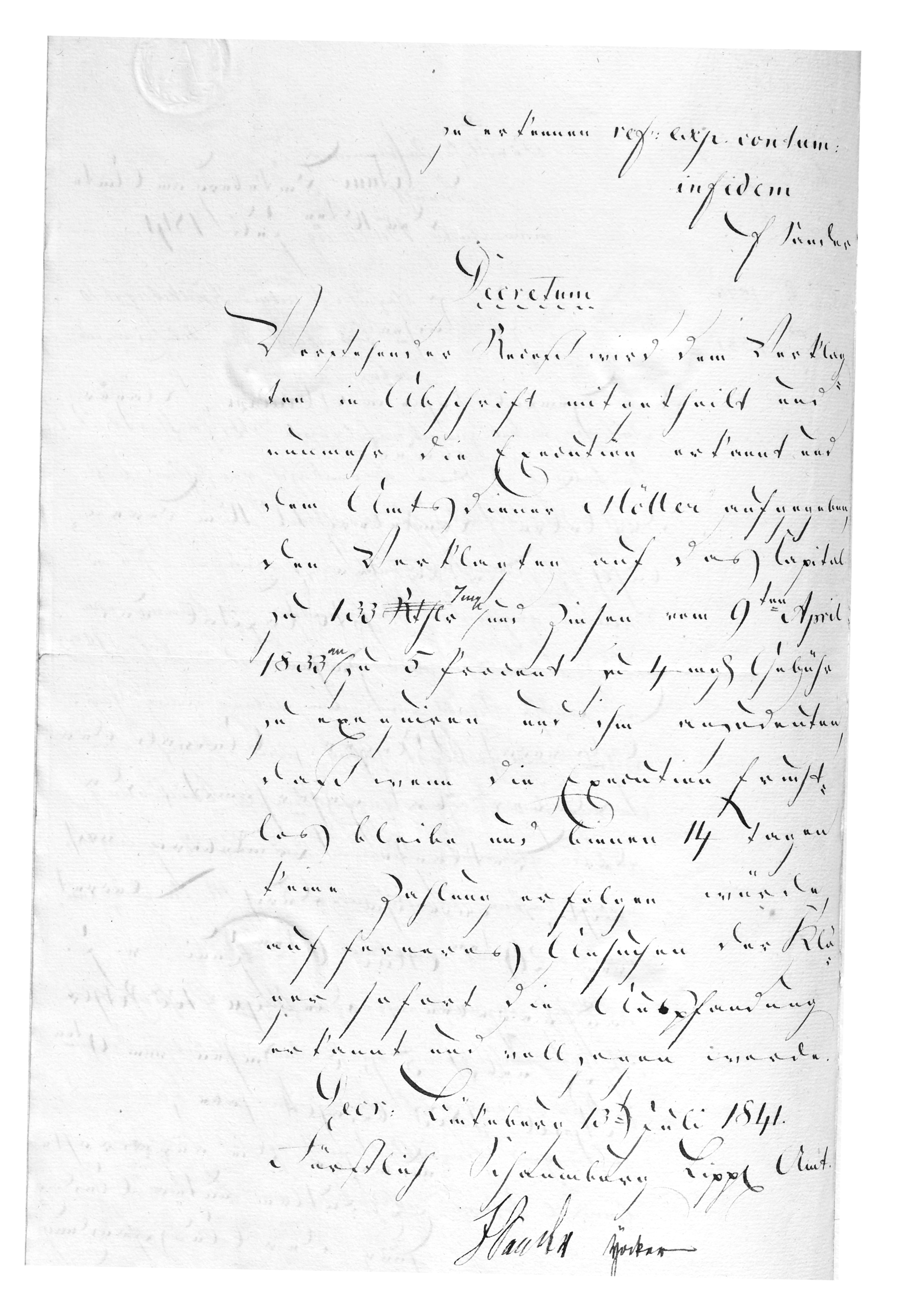
On 13 July 1841 the Amt issued its Decretum: the order was to be served on Krückeberg; execution was now recognized, and the Amtsdiener Möller (the court bailiff) was instructed to levy for the principal of 133 Reichsthaler 7 Mariengroschen, plus 5% interest from 9 April 1833 and a 4-Mariengroschen fee. Krückeberg was to be warned that if the levy proved fruitless and no payment came within 14 days, the creditor could, upon further request, have distraint immediately ordered and carried out.
In short, this document records the turn from warning to active enforcement: the court tells its bailiff to proceed, sets the exact sum and interest, and puts Krückeberg on a 14-day clock toward seizure if he does not pay.
Terms
distraint in the text means the legal seizure of property to compel payment.
A default judgment means a court decision that is entered against a party who fails to take part in the case — usually because they don’t show up, don’t respond, or otherwise ignore the summons.
In older German legal language (in contumaciam), it meant:
-
The defendant did not appear when summoned, or
-
The defendant refused to answer or participate,
-
So the court decided the matter without hearing their side and in favor of the other party.
Thus, when the clerk writes contum., he’s noting that the judgment was rendered because of Krückeberg’s non-appearance (or non-response), not after a contested hearing.
Transliteration and Translation
| Transliteration | Translation |
|---|---|
                             corner folio:11


Actum Bückeburg am Amte
den 10ten Juli 1841

        In Sachen

der Hempel Söhne in Minden, Kläger,
          wider
den Colon Krückeberg No. 10 in Beren-
busch, Beklagten
         [Totl] Capital und
         Zinsen.

Advocat Meÿer, Anwalt der Kläger bat gehorsamst, da der beklagte
Krückeberg noch nicht, wie ihm durch Decret vom 29ten Mai 6ten
Juni v. J. aufgegeben, die qu: 133 Rthlr 7 g nebst 5 p.c. Zinsen
vom 9ten April 1833 bezahlt habe, nunmehro die angehrohte
Execution, unter Androhung der Auspfandung zu erkennen.
ref: exp: contum: infidem
  F. Sander


      Decretum

Vorstehender Recess wird dem Verklagten in Abschrift mitgeheilt
und nunmehr die Execution erkannt und den Amtsdiener Möller
aufgegeben, den Verklagten auf das Capital zu 133 Rthlr 7 mgl und
29 Zinsen vom 9ten April 1833 zu 5 Procent zu 4 mgl Gebühr in
exequiren und ihm anzudeuten, daß[,] wenn die Execution fruchtlos
bleibe und binnen 14 Tagen keine Zahlung erfolgen würde, auf
ferneres Ansuchen der Kläger sofort die Auspfandung erkannt und
vollzogen werde.

  Decr: Bückeburg 13t Juli 1841.
  Fürstlich Schaumburg Upp. Amt.

     Hauck   Höcker
|
[11/1i]

Done at Bückeburg, at the Amt
on the 10th of July 1841


        In the matter of

the Hempel Sons in Minden, plaintiffs,
          versus
the Colon Krückeberg No. 10 in
Berenbusch, defendant,
         [Total] capital and
         interest.

Advocate Meyer, attorney for the plaintiffs, most respectfully
requested that, since the defendant Krückeberg has still not—
as was ordered to him by decree of the 29th of May and 6th of
June of last year—paid the sum of 133 Reichsthaler 7 Groschen
together with 5 percent annual interest from the 9th of April
1833, the threatened enforcement of judgment, with warning
of distraint [seizure of property], now be decreed.

Entered and issued as a default judgment, in witness thereof.
       F. Sander

      Decree

The foregoing petition is to be communicated to the defendant in
copy, and the enforcement of judgment is now ordered. The court
officer Möller is ordered to collect from the defendant the
principal of 133 Reichsthaler 7 Mariengroschen, interest at 5
percent from 9 April 1833, and a fee of 4 Mariengroschen.  He is
further to make clear to him that, if this enforcement proves
fruitless and no payment is made within 14 days, then upon
further request of the plaintiffs, seizure of property (distraint)
will immediately be ordered and carried out.

Decreed at Bückeburg, the 13th of July 1841.
Princely Schaumburg District Office.

     Hauck      Höcker
|
|
A default judgment means a court decision that is entered against a party who fails to take part in the case — usually because they don’t show up, don’t respond, or otherwise ignore the summons. In older German legal language (in contumaciam), it meant:
So when the clerk writes contum., he’s noting that the judgment was rendered because of Krückeberg’s non-appearance (or non-response), not after a contested hearing. |